
Introduction
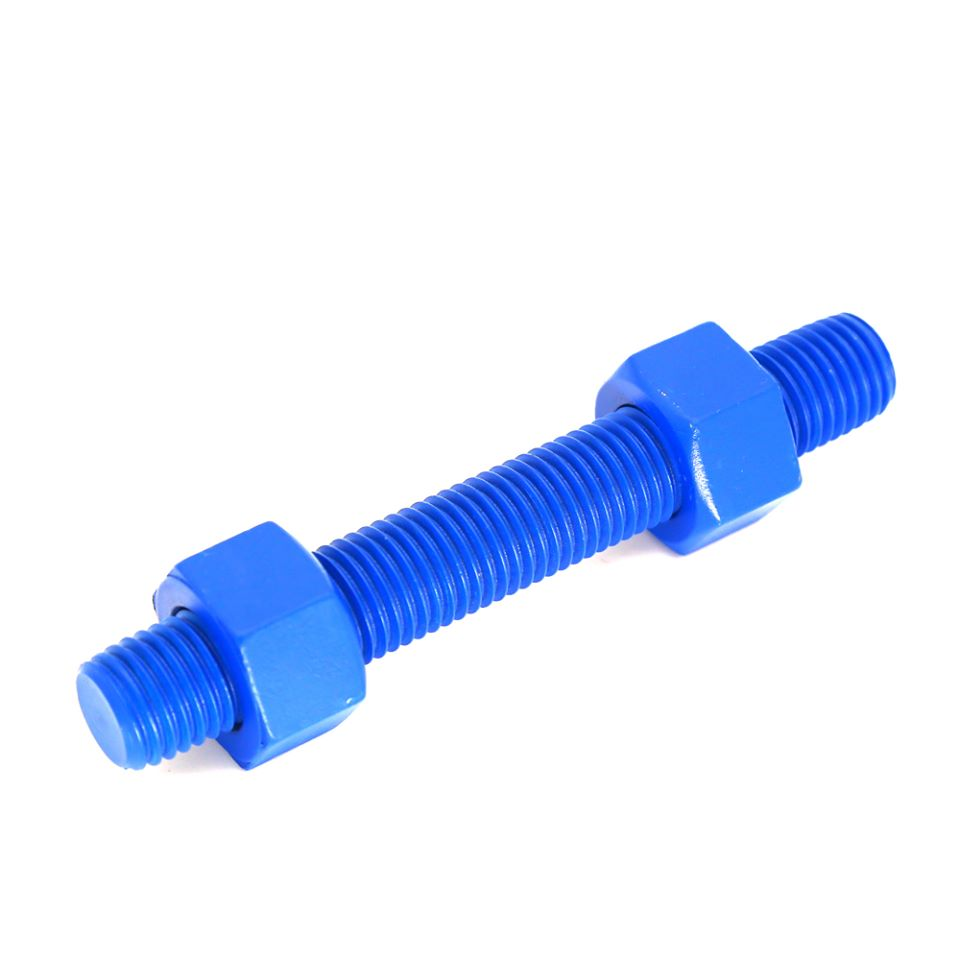
Bolts and washers are fundamental fastening components integral to a vast spectrum of industrial applications, from automotive assembly and aerospace engineering to civil infrastructure and heavy machinery. These seemingly simple components are critical for maintaining structural integrity, ensuring load distribution, and preventing joint failure. This guide provides an in-depth technical overview of bolts and washers, encompassing material science, manufacturing processes, performance characteristics, potential failure modes, and relevant industry standards. A core industry pain point centers on selecting appropriate bolt/washer material combinations to mitigate galvanic corrosion in dissimilar metal joints, alongside ensuring consistent preload control for optimal joint performance and fatigue life. Further complications arise from accurately specifying washers to achieve desired clamping force distribution and prevent joint loosening due to vibration.
Material Science & Manufacturing
Bolts and washers are commonly manufactured from carbon steels (low, medium, and high carbon), alloy steels (containing elements like manganese, chromium, molybdenum, nickel), and stainless steels (austenitic, ferritic, martensitic). The specific material selection depends on the required strength, corrosion resistance, temperature tolerance, and application environment. Carbon steel offers high strength at a relatively low cost but is susceptible to corrosion. Alloy steels provide enhanced strength and toughness. Stainless steels offer superior corrosion resistance but generally lower strength compared to carbon or alloy steels. Washers can also be fabricated from non-metallic materials like nylon or PTFE for specific applications requiring electrical isolation or reduced friction.
Bolt manufacturing typically involves cold heading (for smaller diameters) or hot forging (for larger diameters). Cold heading improves material strength through work hardening. Hot forging allows for the production of complex bolt geometries. Subsequent machining operations, such as threading and head forming, are performed. Critical parameters include die geometry (cold heading), forging temperature and pressure (hot forging), and thread pitch accuracy (machining). Washer manufacturing usually involves punching from sheet metal followed by optional finishing operations such as deburring and surface treatment.
Surface treatments are crucial for enhancing corrosion resistance and improving functional performance. Common treatments include zinc plating (sacrificial corrosion protection), phosphate coating (corrosion resistance and paint adhesion), and passivation (for stainless steels, enhancing corrosion resistance). Hydrogen embrittlement is a major concern during zinc plating of high-strength steels, requiring post-treatment baking to mitigate the risk of premature failure. Thread locking compounds or mechanical locking features (e.g., nylon inserts) are frequently employed to prevent loosening under vibration.
Performance & Engineering
The performance of bolted joints is governed by several factors, including bolt preload, clamping force, material strength, and fatigue resistance. Preload is the initial tensile stress induced in the bolt when it is tightened. Correct preload is essential for preventing joint separation and maintaining clamping force under service loads. The relationship between preload and clamping force is determined by the bolt’s stiffness and the number of bolts in the joint. Torque control is the most common method for achieving desired preload, but direct tension indicators (DTIs) and ultrasonic elongation measurement offer more precise control.
Environmental resistance is another critical consideration. Corrosion, particularly galvanic corrosion between dissimilar metals, can significantly reduce the strength and durability of bolted joints. Selection of compatible materials and application of protective coatings are crucial for mitigating corrosion. Temperature fluctuations can also affect bolt preload due to thermal expansion and contraction. Fatigue failure can occur under cyclic loading, particularly in joints subjected to vibration. Fatigue life is influenced by bolt preload, stress concentration at the thread root, and material properties. Finite element analysis (FEA) is often used to optimize joint design and predict stress distribution under various loading conditions. Compliance requirements, such as those dictated by ISO 898-1 for mechanical properties of bolts and ISO 7089 for property classes, are paramount for ensuring safety and reliability.
Technical Specifications
| Property | Grade 5 Bolt (SAE) | Grade 8 Bolt (SAE) | Stainless Steel 304 Washer | Stainless Steel 316 Washer |
|---|---|---|---|---|
| Tensile Strength (MPa) | 830 | 1040 | 500-700 | 500-700 |
| Yield Strength (MPa) | 690 | 950 | 210 | 210 |
| Hardness (Rockwell C) | 70-80 | 85-95 | 85-100 | 85-100 |
| Corrosion Resistance | Low (requires coating) | Low (requires coating) | Good | Excellent (superior to 304) |
| Typical Applications | General purpose fastening | High-strength applications | General purpose, moderate corrosion | Marine, chemical processing |
| Material Composition | Medium Carbon Steel | Alloy Steel (e.g., 4140) | 304 Stainless Steel | 316 Stainless Steel |
Failure Mode & Maintenance
Bolted joints are susceptible to several failure modes. Thread stripping, the damage or deformation of bolt threads, occurs when the tensile stress exceeds the thread’s shear strength. Fatigue cracking initiates at stress concentrations, such as the thread root or under the bolt head, and propagates under cyclic loading. Corrosion, as previously discussed, weakens the bolt and washer material, leading to reduced strength and premature failure. Hydrogen embrittlement, particularly in high-strength steels, causes brittle fracture. Loosening, caused by vibration or creep, reduces clamping force and can lead to joint separation.
Preventive maintenance is crucial for ensuring the long-term reliability of bolted joints. Regular inspection for signs of corrosion, thread damage, and loosening is essential. Torque checks should be performed periodically to maintain proper preload. Lubrication reduces friction and prevents galling. In corrosive environments, protective coatings should be inspected and reapplied as needed. If a bolt or washer shows signs of damage, it should be replaced immediately. Proper storage of bolts and washers in a dry environment prevents corrosion and maintains their mechanical properties. Detailed failure analysis, including fractography and metallographic examination, is critical for identifying the root cause of failures and implementing corrective actions.
Industry FAQ
Q: What is the effect of thread engagement length on joint strength?
A: Thread engagement length is the length of the bolt threads that are in contact with the threads of the tapped hole. Shorter engagement lengths reduce the shear area resisting stripping and therefore decrease the joint’s strength. A minimum engagement length, typically 1 to 1.5 times the bolt diameter, is recommended to ensure adequate shear resistance. Insufficient engagement can lead to thread stripping under load.
Q: How do you select the correct washer for a specific application?
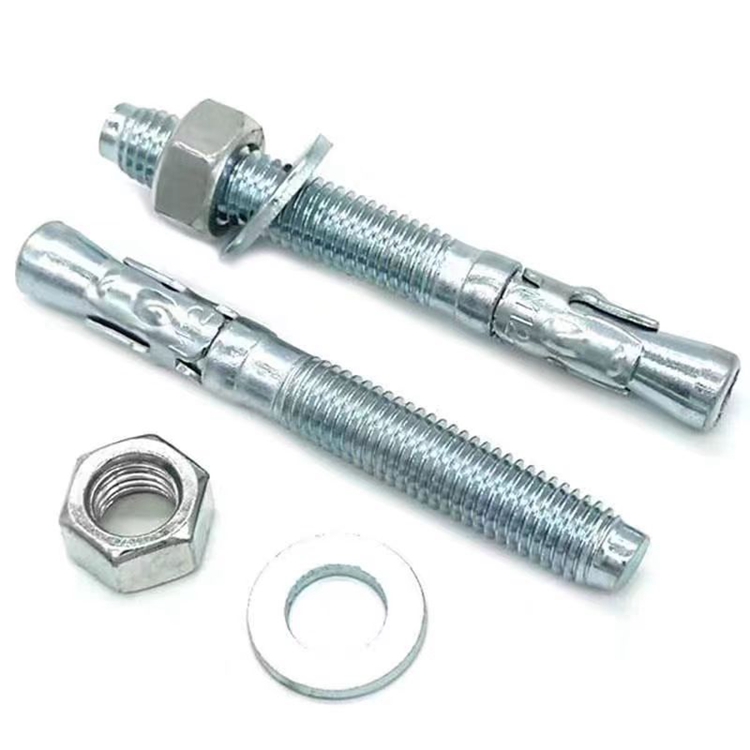
A: Washer selection depends on factors such as load distribution, corrosion resistance, and surface finish requirements. Flat washers distribute the clamping force evenly under the bolt head or nut. Lock washers (split, tooth, or nylon insert) prevent loosening under vibration. Stainless steel washers are used in corrosive environments. The washer's outer diameter should be large enough to distribute the load effectively without bearing directly on the fastened material. Hardness of the washer must be appropriate to avoid deformation under load.
Q: What are the risks associated with using dissimilar metals in bolted joints?
A: Dissimilar metals create a galvanic cell, leading to galvanic corrosion. The more anodic metal will corrode preferentially. This is particularly problematic in wet or corrosive environments. To mitigate this, select materials that are close together in the galvanic series, use sacrificial anodes, apply insulating coatings, or use compatible materials with similar electrochemical potentials.
Q: How does bolt preload affect fatigue life?
A: Proper bolt preload significantly improves fatigue life. Higher preload increases the clamping force, reducing relative motion between the joined parts and minimizing stress concentrations. However, excessively high preload can exceed the bolt's yield strength, leading to plastic deformation and reduced fatigue resistance. Optimal preload is a balance between maximizing clamping force and avoiding overstressing the bolt.
Q: What are the advantages of using direct tension indicators (DTIs) over torque control?
A: DTIs provide a more accurate method for achieving desired bolt preload compared to torque control. Torque control is affected by friction variations in the threads and under the bolt head. DTIs directly measure the bolt elongation, providing a more precise indication of preload. This is particularly beneficial in critical applications where accurate preload is essential for joint integrity.
Conclusion
Bolts and washers are critical fastening elements whose performance is dictated by a complex interplay of material properties, manufacturing processes, and engineering design considerations. Selecting the appropriate materials, controlling manufacturing parameters, and ensuring correct preload are paramount for achieving robust and reliable bolted joints. Understanding potential failure modes and implementing preventive maintenance practices are crucial for maximizing the lifespan and safety of these essential components.
Future developments in bolted joint technology will likely focus on advanced materials (e.g., high-strength alloys and composite materials), improved fastening techniques (e.g., self-locking bolts and smart fasteners with embedded sensors), and sophisticated modeling and simulation tools (e.g., FEA and machine learning) to optimize joint design and predict performance. Continued research into corrosion mitigation strategies and fatigue resistance will further enhance the reliability and durability of bolted joints across a wide range of industrial applications.