

Introduction
Truck bed bolts are critical fastening components utilized in the construction, assembly, and maintenance of truck bed structures. These bolts secure bed liners, stake sides, tie-down anchors, and the bed itself to the vehicle frame. Their performance directly impacts load security, structural integrity, and overall vehicle safety. The industry historically relied on Grade 5 and Grade 8 bolts, however, increasing demands for higher tensile strengths, corrosion resistance, and specific thread geometries have driven material and manufacturing advancements. This guide provides an in-depth technical analysis of truck bed bolts, covering material science, manufacturing processes, performance characteristics, failure modes, and relevant industry standards. Understanding these factors is essential for selecting the optimal bolt for specific applications and ensuring long-term reliability, especially given the significant stresses and environmental conditions encountered in typical truck bed usage. Core industry pain points center on preventing bolt failure due to fatigue, corrosion, and improper torque application, leading to load loss and potential accidents.
Material Science & Manufacturing
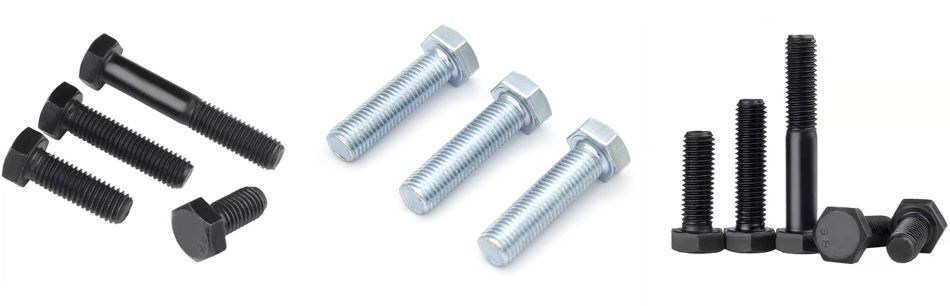
The predominant materials used in truck bed bolt manufacturing are medium carbon alloy steels, specifically AISI 4140 and 8740. AISI 4140 offers a high strength-to-weight ratio and good hardenability, while 8740 provides improved toughness and ductility. Stainless steel (304, 316) is increasingly utilized for applications requiring superior corrosion resistance, particularly in marine or de-icing salt environments. The manufacturing process typically begins with hot forging, forming the bolt head and initiating the shank. This is followed by cold heading to refine the shape and increase the material’s density. Thread rolling, a cold forming process, creates the threads without material removal, improving fatigue resistance compared to thread cutting. Heat treatment – typically quenching and tempering – is crucial for achieving the desired mechanical properties. For high-strength bolts (Grade 8 and above), surface treatments like phosphate coating (manganese phosphate is common) or zinc plating are applied to enhance corrosion resistance. Critical parameters during manufacturing include precise control of forging temperature, cold working reduction, quenching medium, tempering temperature, and coating thickness. Variations in these parameters can significantly impact the bolt’s yield strength, tensile strength, and fatigue life. Microstructural analysis, including grain size and inclusion content, is essential for quality control. Hydrogen embrittlement, a potential issue during phosphate coating, must be mitigated through baking processes.
Performance & Engineering
The primary performance requirements for truck bed bolts are tensile strength, yield strength, shear strength, and fatigue resistance. Tensile strength, the maximum stress the bolt can withstand before breaking, is paramount for securing heavy loads. Yield strength, the stress at which permanent deformation occurs, dictates the bolt's ability to maintain clamping force under load. Shear strength is crucial for applications where the bolt is subjected to transverse forces. Fatigue resistance, the ability to withstand repeated loading cycles, is critical given the dynamic nature of truck operation and the constant vibrations. Finite Element Analysis (FEA) is commonly employed to model stress concentrations around the bolt head, thread root, and shank, optimizing bolt geometry for improved performance. Thread form also plays a vital role; Unified National Coarse (UNC) and Unified National Fine (UNF) threads are frequently used, with UNF offering higher tensile stress area. Torque-tension relationships are critical, requiring precise torque control during installation to achieve the desired preload. Preload is the clamping force generated by the bolt, and insufficient preload can lead to joint loosening and fatigue failure. Environmental resistance, particularly to corrosion from road salt and moisture, is a significant concern. Coatings, material selection, and cathodic protection strategies are employed to mitigate corrosion. Compliance with Department of Transportation (DOT) regulations regarding load securement is also essential.
Technical Specifications
| Grade | Tensile Strength (MPa) | Yield Strength (MPa) | Hardness (Rockwell C) | Typical Material | Corrosion Resistance |
|---|---|---|---|---|---|
| Grade 5 | 830 | 690 | 30-35 | Medium Carbon Steel | Limited (requires coating) |
| Grade 8 | 1040 | 950 | 33-39 | Alloy Steel (4140) | Moderate (requires coating) |
| Class 10.9 | 1090 | 980 | 33-39 | Alloy Steel | Moderate (requires coating) |
| 304 Stainless Steel | 517 | 276 | 20-30 | Austenitic Stainless Steel | Excellent |
| 316 Stainless Steel | 620 | 290 | 20-30 | Austenitic Stainless Steel (with Molybdenum) | Superior (enhanced resistance to chloride corrosion) |
| A4 (316) | 790 | 290 | 25-35 | Austenitic Stainless Steel (with Molybdenum) | Superior |
Failure Mode & Maintenance
Common failure modes for truck bed bolts include fatigue cracking, thread stripping, corrosion-induced failure, and hydrogen embrittlement. Fatigue cracking typically initiates at stress concentrations, such as the thread root or under the bolt head, and propagates under cyclic loading. Thread stripping occurs when the bolt is over-torqued or subjected to excessive shear forces. Corrosion, particularly pitting corrosion in salt-laden environments, weakens the bolt material and accelerates failure. Hydrogen embrittlement, a concern with phosphate-coated bolts, reduces ductility and increases susceptibility to cracking. Preventative maintenance involves regular inspection for signs of corrosion, thread damage, or loosening. Torque checks should be performed periodically, especially after initial installation and after significant vehicle use. Lubricating the threads during installation reduces friction and ensures accurate torque application. If corrosion is detected, the bolt should be replaced. For high-stress applications, consider using stainless steel bolts or applying anti-seize compounds. Proper load distribution is also crucial; avoid overloading the truck bed and ensure loads are securely tied down. Visual inspection for deformation or stretching is also recommended. Replace any bolts exhibiting signs of damage or fatigue.
Industry FAQ
Q: What is the difference between Grade 8 and Class 10.9 bolts, and which is stronger?
A: Both Grade 8 and Class 10.9 bolts are high-strength fasteners, but Class 10.9 generally exhibits slightly higher tensile and yield strengths. Grade 8 utilizes a predominantly American standard while Class 10.9 adheres to the metric standard. While the difference may seem small, the material composition and manufacturing processes associated with Class 10.9 often lead to superior performance in demanding applications. However, interchangeability requires careful consideration of thread pitch and dimensions.
Q: How does corrosion impact the performance of truck bed bolts?
A: Corrosion significantly weakens truck bed bolts, reducing their tensile strength and fatigue life. Pitting corrosion, induced by exposure to road salt and moisture, creates microscopic stress risers that accelerate crack initiation. Galvanic corrosion can also occur when dissimilar metals are in contact. Stainless steel bolts offer superior corrosion resistance, but even they can be susceptible to corrosion in severe environments. Protective coatings like zinc plating or phosphate coating can mitigate corrosion but require periodic reapplication.
Q: What is the correct torque specification for a Grade 8 bolt securing a truck bed liner?
A: The correct torque specification depends on the bolt diameter, thread pitch, and the materials being joined. A general guideline for a ½” Grade 8 bolt is between 110-135 ft-lbs, but always consult the truck bed liner manufacturer’s recommendations. Using a calibrated torque wrench is crucial to ensure accurate preload. Over-torquing can lead to thread stripping, while under-torquing can result in joint loosening.
Q: How can I prevent thread stripping when installing truck bed bolts?
A: Preventing thread stripping requires careful installation practices. Always clean the threads of both the bolt and the receiving hole. Apply a thread lubricant to reduce friction and ensure smooth engagement. Use a calibrated torque wrench and adhere to the manufacturer’s torque specifications. Avoid cross-threading the bolt during installation. If encountering resistance, stop and re-align the bolt before applying further force.
Q: What are the benefits of using stainless steel bolts in truck bed applications?
A: Stainless steel bolts offer exceptional corrosion resistance, making them ideal for environments exposed to road salt, moisture, and harsh chemicals. This reduces the risk of failure due to corrosion and extends the lifespan of the fasteners. However, stainless steel generally has lower tensile strength than alloy steel bolts like Grade 8, so proper material selection is crucial based on the specific application's load requirements.
Conclusion
Truck bed bolt selection and maintenance are critical for ensuring the safety and reliability of truck bed applications. Understanding the material properties, manufacturing processes, and potential failure modes is essential for making informed decisions. The ongoing trend towards higher-strength materials and corrosion-resistant coatings reflects the increasing demands placed on these critical components. Proper torque control, regular inspection, and preventative maintenance are key to maximizing bolt lifespan and minimizing the risk of load loss or structural failure.
Future developments in truck bed bolt technology will likely focus on advanced materials, such as titanium alloys and high-strength aluminum alloys, to further reduce weight and enhance corrosion resistance. Smart bolts equipped with sensors to monitor preload and detect corrosion are also under development. Adherence to industry standards and best practices will remain paramount for ensuring the safe and efficient operation of trucks and the securement of transported cargo.