
Introduction
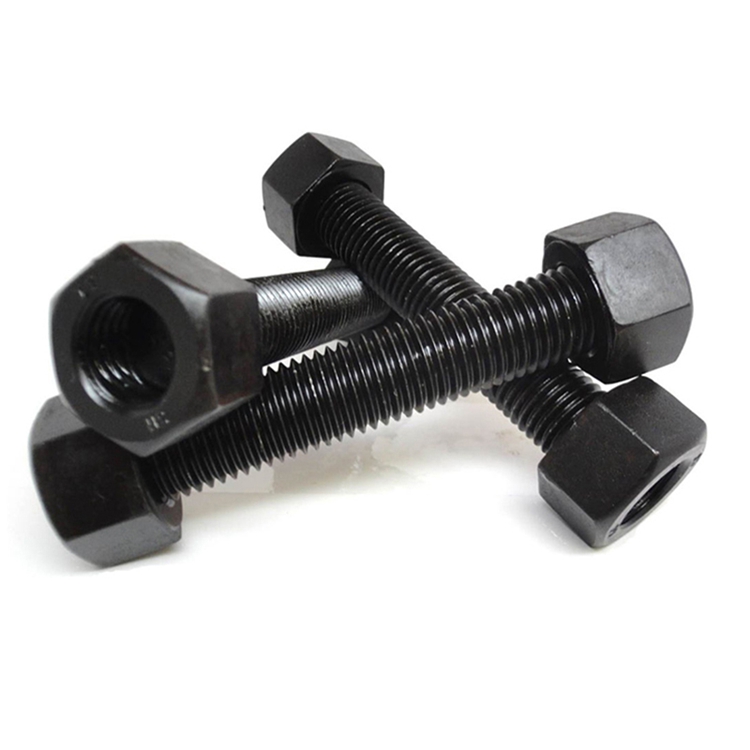
ASTM A307 bolts are carbon steel fasteners utilized in various structural applications where moderate strength is sufficient. Defined by ASTM standards, these bolts are commonly employed in machine construction, structural steelwork, and general assembly, but are not intended for high-stress or critical applications. Their primary advantage lies in their cost-effectiveness and ease of machinability. The A307 specification covers bolts, screws, and studs ranging in size, and is characterized by a relatively low carbon content, contributing to their ductility and weldability. Understanding their limitations—particularly their lower tensile and yield strength compared to higher grade bolts—is critical for proper engineering application. This guide will provide a comprehensive technical overview of ASTM A307 bolts, covering their material composition, manufacturing processes, performance characteristics, potential failure modes, and relevant industry standards.
Material Science & Manufacturing
ASTM A307 bolts are typically manufactured from carbon steel, with chemical composition requirements specified within the ASTM A307 standard. The steel typically contains 0.25% carbon maximum, along with manganese, phosphorus, sulfur, and silicon within defined limits. These elements influence the steel's mechanical properties. Manganese increases strength and hardenability; phosphorus and sulfur, if present in excess, can decrease ductility and weldability; and silicon acts as a deoxidizer during steelmaking. The manufacturing process commonly begins with hot-rolling steel billets into bars. These bars are then subjected to cold drawing or cold heading to achieve the desired bolt dimensions. Cold working increases the yield and tensile strength of the steel, but also reduces ductility. Threading is typically performed via a rolling process, which is superior to machining as it preserves the grain flow of the metal, increasing fatigue resistance. Heat treatment is generally not specified for A307 bolts, differentiating them from higher-strength grades like A325. Quality control includes dimensional checks, hardness testing (typically Rockwell or Brinell), and chemical analysis to verify compliance with the standard. Surface finishes frequently involve phosphate or zinc coatings for corrosion resistance, applied post-manufacturing.
Performance & Engineering
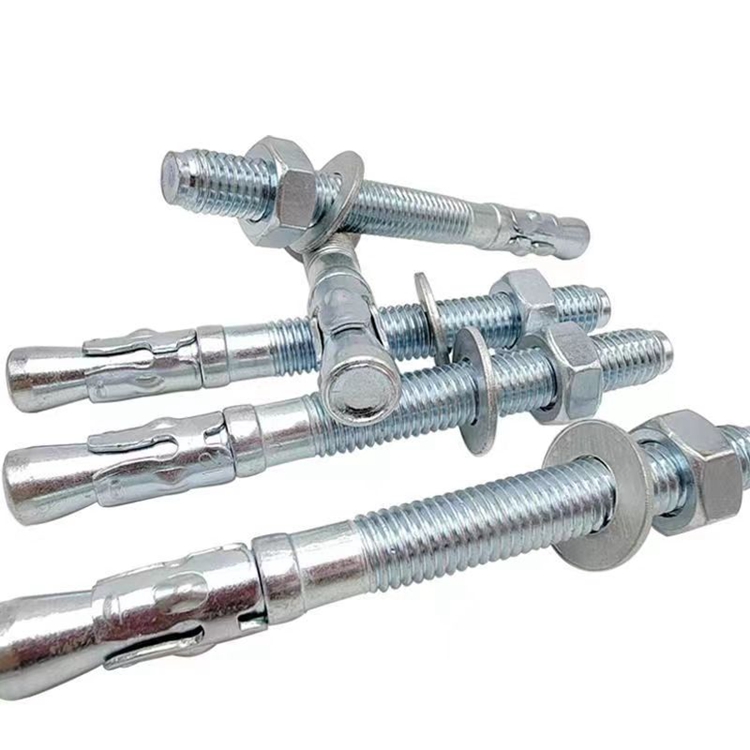
The performance of ASTM A307 bolts is primarily governed by their tensile strength, yield strength, and elongation properties. Typical tensile strength ranges from 60,000 to 80,000 psi (414 to 552 MPa), and yield strength from 30,000 to 50,000 psi (207 to 345 MPa). Elongation, a measure of ductility, is typically around 20% in a 2-inch gauge length. When selecting A307 bolts for a given application, engineers must consider the applied load, the type of loading (static vs. dynamic), and the environmental conditions. Shear stresses are commonly encountered in bolted connections, and the bolt's shear strength must be sufficient to prevent failure. Fatigue loading, characterized by cyclical stresses, is a significant concern, especially in applications subject to vibration or repeated loading cycles. A307 bolts exhibit limited fatigue resistance compared to higher-strength grades. Corrosion is also a critical performance factor. The carbon steel material is susceptible to rust, especially in humid or corrosive environments. Protective coatings, like zinc plating, can mitigate corrosion, but their effectiveness depends on the coating thickness and environmental exposure. Bolt preload, the initial tension applied to the bolt during installation, is crucial for maintaining joint integrity. Insufficient preload can lead to loosening and failure, while excessive preload can cause yielding or stripping of threads.
Technical Specifications
| Specification | Grade | Tensile Strength (psi) | Yield Strength (psi) | Elongation (%) | Hardness (Rockwell C) |
|---|---|---|---|---|---|
| ASTM A307 | Grade A | 60,000 - 80,000 | 30,000 - 50,000 | 20 | < 70 |
| ASTM A307 | Grade B | 70,000 - 90,000 | 40,000 - 60,000 | 18 | 70 - 80 |
| ISO 898-1 | 4.6 | 64,000 | 42,000 | 16 | - |
| ISO 898-1 | 5.8 | 83,000 | 57,000 | 14 | - |
| DIN 933 | 4.6 | 64,000 | 42,000 | 16 | - |
| DIN 933 | 5.8 | 83,000 | 57,000 | 14 | - |
Failure Mode & Maintenance
ASTM A307 bolts are susceptible to several failure modes, including tensile failure, shear failure, fatigue failure, thread stripping, and corrosion-induced failure. Tensile failure occurs when the bolt is subjected to a load exceeding its tensile strength, resulting in fracture. Shear failure happens when the shear stress exceeds the bolt’s shear strength. Fatigue failure is initiated by cyclical loading, leading to crack propagation and eventual failure, often at stress concentrations around threads or bolt holes. Thread stripping occurs when the threads of the bolt or the mating component are damaged or worn, reducing the clamping force. Corrosion, particularly in aggressive environments, weakens the bolt material and can accelerate other failure modes. Maintenance practices should include regular visual inspections for signs of corrosion, loosening, or damage. Torque checks should be performed periodically to ensure adequate preload is maintained. If corrosion is detected, the bolts should be replaced. Lubrication of the threads during installation and re-tightening can reduce friction and prevent galling. For applications exposed to harsh environments, consider using corrosion-resistant coatings or switching to alternative materials like stainless steel. Proper installation techniques, including correct tightening torque and use of calibrated torque wrenches, are crucial for preventing premature failure.
Industry FAQ
Q: What is the primary difference between ASTM A307 and A325 bolts, and when should I use each?
A: ASTM A307 bolts are generally used for applications with lower strength requirements, while A325 bolts are high-strength bolts intended for structural connections demanding greater load-carrying capacity. A325 bolts require specific tightening procedures (torque control or turn-of-nut method) and are typically heat-treated to achieve their higher strength. A307 bolts are often suitable for general machinery assembly or non-critical structural applications.
Q: How does the coating applied to an A307 bolt impact its corrosion resistance?
A: Coatings like zinc plating provide a barrier between the steel and the environment, significantly improving corrosion resistance. However, the effectiveness of the coating depends on its thickness, uniformity, and the presence of any defects. Galvanizing offers superior corrosion protection compared to zinc plating, but is also more expensive. Consider the operating environment when selecting a coating; marine or highly corrosive environments require more robust protection.
Q: What is the effect of cold working on the properties of an A307 bolt?
A: Cold working, such as cold drawing or cold heading, increases the yield and tensile strength of the A307 bolt, but reduces its ductility. This means the bolt becomes stronger but more brittle. While beneficial for strength, it's essential to consider the potential for reduced toughness and increased susceptibility to fatigue failure.
Q: What torque should be applied to an A307 bolt when joining two steel plates?
A: The appropriate torque depends on the bolt diameter, thread pitch, lubrication, and the desired clamping force. Consult torque charts or engineering guidelines for specific recommendations. Overtightening can yield the bolt or strip the threads, while undertightening can lead to joint loosening. Always use a calibrated torque wrench.
Q: Can A307 bolts be welded? What precautions should be taken?
A: While A307 bolts can be welded, it's generally not recommended, especially for critical applications. Welding can alter the bolt’s material properties and reduce its strength. If welding is necessary, use low-hydrogen electrodes and minimize heat input to avoid affecting the bolt’s integrity. Post-weld heat treatment may be required to restore some of the original properties.
Conclusion
ASTM A307 bolts represent a cost-effective fastening solution for a broad range of applications where moderate strength is sufficient. Their carbon steel composition, coupled with established manufacturing processes, delivers acceptable performance characteristics for many general-purpose engineering projects. However, their limitations – notably lower strength and susceptibility to corrosion – must be carefully considered during the design and selection phases. Understanding the potential failure modes and implementing appropriate maintenance practices are vital to ensuring long-term reliability and safety.
Future developments in fastener technology are focusing on enhanced corrosion resistance and improved fatigue performance. Exploring alternative coatings, such as advanced polymer coatings or duplex coatings (zinc-nickel), and adopting more sophisticated manufacturing techniques like shot peening to introduce compressive stresses can further enhance the durability of A307 bolts and extend their applicability in more demanding environments. Continuous adherence to industry standards and best practices remains paramount for reliable performance.