
Introduction
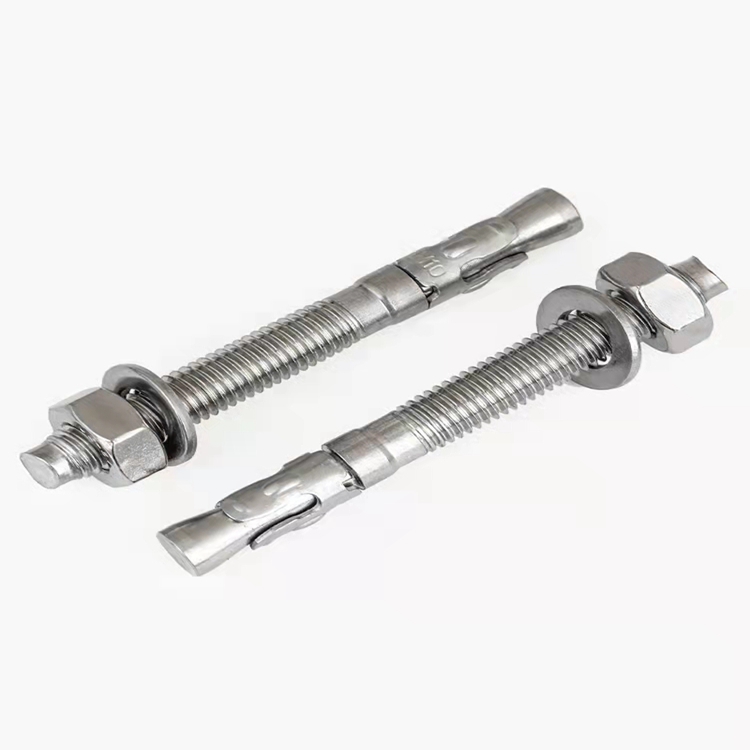
6mm bolts represent a ubiquitous fastening element critical across numerous industrial applications, ranging from automotive assembly and aerospace engineering to construction and general machinery. These fasteners are characterized by a 6-millimeter diameter shank, forming the core load-bearing component. Their technical position within the industrial chain is foundational; they enable the assembly of larger systems and structures. Core performance characteristics include tensile strength, yield strength, shear strength, fatigue resistance, and corrosion resistance, all of which directly impact the integrity and longevity of assembled products. The selection of an appropriate 6mm bolt necessitates careful consideration of the application's specific loading conditions, environmental factors, and required safety margins. The industry faces persistent challenges related to material traceability, consistent quality control, and the need for bolts capable of operating in increasingly demanding environments, driving innovation in material composition and manufacturing processes.
Material Science & Manufacturing
The most common material for 6mm bolts is carbon steel, specifically grades like AISI 1045, offering a balance of strength and cost-effectiveness. Alloy steels, such as those containing chromium, molybdenum, or nickel (e.g., 4140, 8.8, 10.9, and 12.9 grades according to ISO 898-1), are employed for higher strength and improved corrosion resistance. Stainless steels (e.g., 304, 316) provide superior corrosion resistance but generally lower tensile strength compared to alloy steels. Titanium alloys are utilized in aerospace applications demanding exceptional strength-to-weight ratios and corrosion resistance. The manufacturing process typically begins with rod stock cut to length. The head is formed through cold heading or hot forging, depending on the material and required head shape. Cold heading is preferred for high-volume production due to its speed and material efficiency. Following head formation, the bolt undergoes thread rolling, a cold-forming process that imparts the threads without material removal, enhancing thread strength. Heat treatment, including hardening and tempering, is crucial for achieving the desired mechanical properties. Key parameters during heat treatment include austenitizing temperature, quenching medium, and tempering temperature. Surface treatments like zinc plating, black oxide coating, or hot-dip galvanizing are applied for corrosion protection. Process control is paramount; variations in material composition, heat treatment parameters, or thread rolling pressure can significantly impact bolt performance.
Performance & Engineering
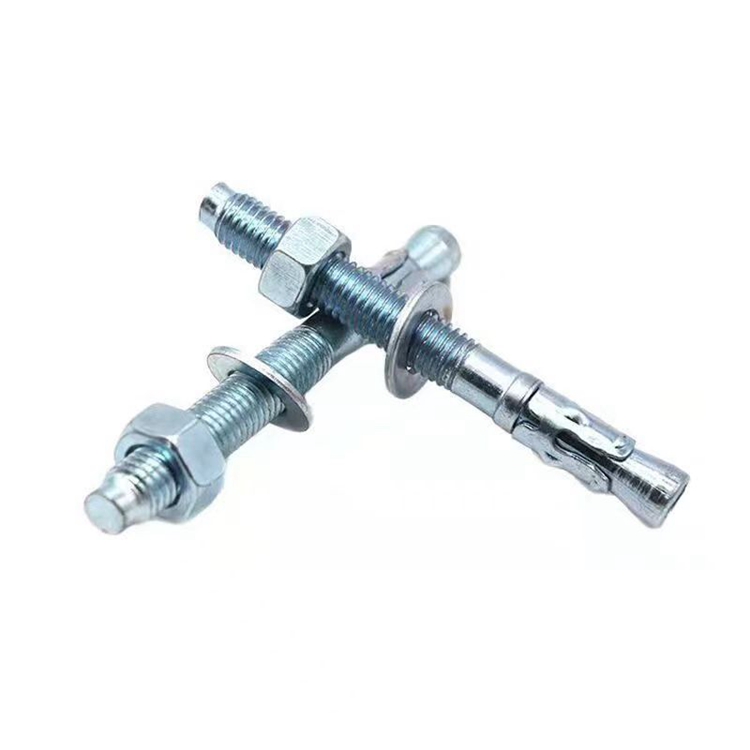
The performance of a 6mm bolt is primarily governed by its mechanical properties. Tensile strength, measured in MPa, represents the maximum stress the bolt can withstand before fracture. Yield strength defines the stress at which the bolt begins to deform permanently. Shear strength indicates the bolt's resistance to forces acting parallel to its shank. Fatigue resistance is critical in applications involving cyclic loading, where repeated stress can lead to crack initiation and propagation. Environmental resistance is another key consideration. Exposure to corrosive environments can lead to pitting corrosion, stress corrosion cracking, and hydrogen embrittlement, reducing bolt strength and lifespan. Engineering calculations involve determining the required bolt preload (tightening torque) to achieve sufficient clamping force. This preload must be carefully controlled to avoid over-tightening (leading to bolt failure) or under-tightening (leading to joint loosening). Finite element analysis (FEA) is often employed to simulate stress distribution within the bolted joint and optimize bolt selection and preload. Compliance requirements are dictated by industry standards such as ISO 898-1, ASTM A307, and DIN 933, specifying material requirements, mechanical properties, and testing procedures. Failure analysis often focuses on fracture surfaces to determine the root cause of failure (e.g., shear failure, tensile failure, fatigue failure).
Technical Specifications
| Grade | Tensile Strength (MPa) | Yield Strength (MPa) | Hardness (HV) |
|---|---|---|---|
| 4.8 | 400-500 | 240-330 | 170-220 |
| 8.8 | 800-1000 | 600-700 | 240-340 |
| 10.9 | 1000-1200 | 900-1100 | 320-400 |
| 12.9 | 1200-1400 | 1100-1300 | 380-450 |
| A2 Stainless Steel (304) | 500-700 | 205-310 | 190-255 |
| A4 Stainless Steel (316) | 600-800 | 240-360 | 200-285 |
Failure Mode & Maintenance
Common failure modes for 6mm bolts include tensile overload (fracture due to exceeding tensile strength), shear failure (fracture due to exceeding shear stress), fatigue failure (crack propagation under cyclic loading), stripping of threads (damage to threads due to excessive torque or corrosion), and corrosion-induced failure (reduction in strength due to corrosion). Hydrogen embrittlement, prevalent in high-strength bolts exposed to hydrogen-containing environments, causes delayed brittle fracture. Creep, a time-dependent deformation under constant load, can occur at elevated temperatures. Failure analysis involves examining the fracture surface using microscopy to identify the failure mechanism. Preventive maintenance includes regular inspection for signs of corrosion, loosening, or damage. Torque monitoring during installation is critical to ensure proper preload. Lubrication of threads can reduce friction and prevent galling. In corrosive environments, the use of corrosion-resistant bolts (stainless steel, galvanized steel) or protective coatings is essential. Periodic retightening of bolts may be necessary to compensate for settlement or creep. Replacing bolts exhibiting signs of damage or corrosion is crucial to maintain joint integrity. Non-destructive testing methods, such as ultrasonic testing, can detect internal flaws before catastrophic failure occurs.
Industry FAQ
Q: What is the difference between Grade 8.8 and Grade 10.9 bolts, and when would I choose one over the other?
A: Grade 10.9 bolts offer significantly higher tensile and yield strengths compared to Grade 8.8 bolts. Grade 8.8 bolts are suitable for general-purpose applications where moderate strength is sufficient. Grade 10.9 bolts are preferred for critical applications involving high stress levels, dynamic loading, or demanding environmental conditions. The increased strength of Grade 10.9 comes at a higher cost and may require more stringent torque control during installation.
Q: How does zinc plating protect against corrosion, and what are its limitations?
A: Zinc plating provides sacrificial corrosion protection. The zinc coating corrodes preferentially to the steel bolt, preventing the steel from rusting. However, zinc plating is only effective as long as the coating remains intact. Scratches or damage to the coating expose the underlying steel to corrosion. Zinc plating is less effective in highly corrosive environments (e.g., saltwater) and may require supplemental coatings.
Q: What is the impact of thread lubrication on bolt preload and joint performance?
A: Thread lubrication reduces friction during tightening, allowing for a more accurate and consistent preload to be achieved. Without lubrication, a significant portion of the applied torque is dissipated as friction, resulting in a lower clamping force. Using the correct lubricant ensures that the desired preload is reached without over-tightening, which can damage the bolt or joint.
Q: What is hydrogen embrittlement, and how can it be prevented in high-strength 6mm bolts?
A: Hydrogen embrittlement is a phenomenon where atomic hydrogen diffuses into the metal lattice of high-strength steel bolts, reducing their ductility and causing them to fail prematurely under stress. It is particularly problematic in bolts exposed to hydrogen-containing environments (e.g., during electroplating or in sour gas environments). Prevention strategies include using lower-strength materials, baking the bolts after plating to drive out the hydrogen, and using coatings that prevent hydrogen ingress.
Q: What are the key considerations when selecting a 6mm bolt for a high-temperature application?
A: When selecting a 6mm bolt for high-temperature applications, consider the material's creep resistance, oxidation resistance, and strength retention at elevated temperatures. Stainless steel alloys, such as 316, are generally preferred for their superior high-temperature performance compared to carbon steels. The preload should also be adjusted to account for thermal expansion and contraction of the joint materials.
Conclusion
The selection and application of 6mm bolts require a comprehensive understanding of material science, manufacturing processes, and engineering principles. Proper consideration of mechanical properties, corrosion resistance, and environmental factors is critical to ensure the integrity and longevity of bolted joints. The ongoing evolution of industry standards and the demand for higher-performance fasteners necessitate continuous innovation in materials and manufacturing techniques.
The future of 6mm bolt technology will likely focus on advancements in smart fasteners with integrated sensors for preload monitoring and condition-based maintenance. Further research into novel corrosion-resistant coatings and lightweight materials will also play a key role in enhancing bolt performance and extending their service life. Careful adherence to established standards, combined with a commitment to quality control, remains paramount to mitigating failure risks and ensuring the reliable performance of these essential fastening elements.