
Introduction
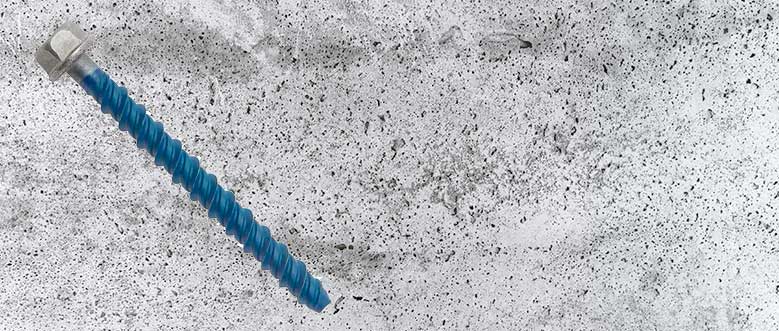
12-point anchor bolts represent a critical fastening solution in a wide array of heavy-duty industrial applications. These bolts are designed to securely connect structural and non-structural elements to concrete foundations, ensuring stability and load-bearing capacity. Commonly utilized in steel construction, machinery installation, bridge construction, and precast concrete applications, 12-point anchor bolts offer enhanced torque transmission capabilities compared to traditional hexagonal designs. Their increased number of contact points minimizes stress concentration and provides superior resistance to loosening under dynamic loads. This guide provides an in-depth technical overview of 12-point anchor bolts, encompassing material science, manufacturing processes, performance characteristics, failure modes, and relevant industry standards. The core pain point addressed is ensuring long-term structural integrity and minimizing the risk of catastrophic failure due to improper selection, installation, or maintenance of these critical components.
Material Science & Manufacturing
The manufacture of 12-point anchor bolts begins with the selection of appropriate materials, primarily high-strength carbon steel (e.g., ASTM A36, A572 Grade 50) or alloy steel (e.g., ASTM A490, A588). The choice of steel grade depends on the anticipated tensile and shear loads. Carbon content influences weldability and hardness, while alloy additions such as manganese, silicon, and chromium enhance strength, toughness, and corrosion resistance. Manufacturing typically involves cold forging or hot forging processes. Cold forging offers higher dimensional accuracy and surface finish but is limited to simpler geometries. Hot forging provides greater flexibility in shape and is suitable for larger bolt diameters. Following forging, the bolts undergo heat treatment – typically quenching and tempering – to achieve the desired mechanical properties. Precise control of temperature and cooling rates is critical to optimize hardness, ductility, and tensile strength. Thread rolling, a cold forming process, creates accurate and consistent threads without material waste. Surface treatments such as zinc plating (ASTM B695), hot-dip galvanizing (ASTM A153), or epoxy coating are applied to provide corrosion protection. Crucially, the quality of the raw material, consistency of the heat treatment process, and the integrity of the surface coating directly affect the long-term performance and reliability of the anchor bolt. Ensuring chemical composition conformance via spectrographic analysis and mechanical property verification through tensile and hardness testing are indispensable quality control measures.
Performance & Engineering
The performance of 12-point anchor bolts is dictated by their ability to withstand tensile, shear, and combined loading conditions. Force analysis involves calculating the stress distribution within the bolt and the connected materials. Finite element analysis (FEA) is often employed to model complex loading scenarios and identify potential stress concentrations. The 12-point design inherently distributes load more evenly across the contact area, reducing localized stress and increasing torque capacity. Environmental resistance is a significant consideration. Corrosion, particularly in marine or chemically aggressive environments, can lead to bolt failure. Proper material selection and protective coatings are essential. Concrete compressive strength and bond characteristics also play a vital role. The anchor bolt’s embedment depth, diameter, and spacing must be carefully calculated to ensure adequate pullout and shear resistance. Compliance requirements vary depending on the application and geographic location. Building codes (e.g., IBC, Eurocode 2) specify minimum anchor bolt requirements based on load conditions and structural design. Seismic design considerations require bolts to withstand dynamic forces and prevent structural collapse during earthquakes. Engineering calculations must account for load factors, safety margins, and potential environmental degradation to ensure structural integrity and prevent catastrophic failure. Crack propagation analysis, fatigue life prediction, and creep assessments are necessary for long-term, high-stress applications.
Technical Specifications
| Diameter (inches) | Material Grade | Tensile Strength (psi) | Yield Strength (psi) |
|---|---|---|---|
| 0.5 | ASTM A36 | 58,000 | 36,000 |
| 0.75 | ASTM A572 Grade 50 | 65,000 | 50,000 |
| 1.0 | ASTM A490 | 160,000 | 130,000 |
| 1.25 | ASTM A588 | 75,000 | 50,000 |
| 1.5 | ASTM A36 | 58,000 | 36,000 |
| 2.0 | ASTM A572 Grade 50 | 65,000 | 50,000 |
Failure Mode & Maintenance
12-point anchor bolts are susceptible to several failure modes. Hydrogen embrittlement, particularly in high-strength steel bolts exposed to corrosive environments, can lead to brittle fracture. Fatigue cracking can occur under cyclic loading, initiating at stress concentrations such as thread roots or surface imperfections. Corrosion, as previously mentioned, weakens the bolt material and reduces its load-carrying capacity. Pullout failure occurs when the bond between the bolt and the concrete exceeds the tensile force. Shear failure happens when the shear stress exceeds the bolt's shear capacity. Thread stripping can occur due to over-tightening or repeated loading. Preventative maintenance is crucial. Regular inspection for signs of corrosion, cracking, or loosening is essential. Torque verification should be performed periodically, especially after initial installation and during major structural changes. Lubrication of threads can prevent galling and facilitate proper torqueing. If corrosion is detected, the bolt should be replaced. In applications prone to vibration, locking devices such as lock washers or thread-locking compounds should be used. If a bolt exhibits signs of fatigue cracking, the entire assembly should be inspected and repaired or replaced as necessary. Implementing a robust inspection and maintenance program will significantly extend the service life of the anchor bolts and prevent catastrophic failures.
Industry FAQ
Q: What is the advantage of a 12-point anchor bolt over a hexagonal bolt in high-vibration applications?
A: The 12-point design offers a larger contact area for wrenching, distributing torque more evenly and reducing the likelihood of rounding off the bolt head. This increased contact area minimizes slippage and provides enhanced resistance to loosening under vibratory conditions compared to a hexagonal bolt.
Q: How does the concrete compressive strength affect the pullout capacity of a 12-point anchor bolt?
A: Higher concrete compressive strength directly increases the bond strength between the bolt and the concrete, resulting in a significantly higher pullout capacity. Pullout capacity is directly proportional to the square root of the concrete compressive strength.
Q: What type of corrosion protection is most effective for 12-point anchor bolts used in saltwater environments?
A: Hot-dip galvanizing (ASTM A153) provides excellent corrosion protection in saltwater environments. The zinc coating acts as a sacrificial anode, corroding preferentially to the steel and preventing corrosion of the bolt. Epoxy coatings offer an additional layer of protection, but require proper surface preparation and application.
Q: What torque value should be used for a 1-inch diameter, ASTM A572 Grade 50, 12-point anchor bolt?
A: The appropriate torque value depends on the bolt's length, the lubrication used, and the concrete condition. However, a typical torque value for a 1-inch diameter ASTM A572 Grade 50 bolt is between 180 ft-lbs and 240 ft-lbs. Always consult the manufacturer's specifications and relevant engineering codes for precise torque recommendations.
Q: How can you identify potential hydrogen embrittlement in a 12-point anchor bolt?
A: Hydrogen embrittlement is difficult to detect visually. Signs may include unexplained brittle fractures, delayed cracking under stress, and a reduction in ductility. Non-destructive testing methods such as ultrasonic testing or magnetic particle inspection can help identify internal flaws. A thorough chemical analysis of the bolt material is also recommended.
Conclusion
12-point anchor bolts are integral components in numerous structural applications, demanding a comprehensive understanding of their material properties, manufacturing processes, and performance characteristics. Proper selection, installation, and maintenance are paramount to ensuring long-term structural integrity and preventing catastrophic failures. The increased contact points of the 12-point design offer distinct advantages in terms of torque transmission and resistance to loosening, especially in demanding environments.
Future advancements in anchor bolt technology may involve the development of new alloy compositions with enhanced corrosion resistance, the implementation of smart monitoring systems to detect early signs of degradation, and the optimization of installation techniques to maximize bond strength. Adhering to established industry standards and employing rigorous quality control measures remain crucial for ensuring the reliable performance of these critical fastening elements.