
Introduction
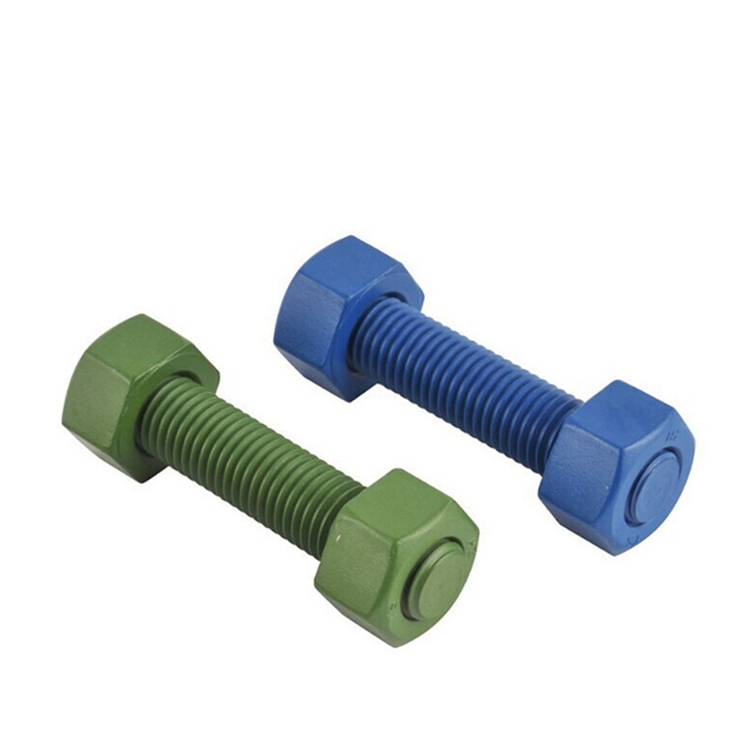
1/4-inch bolts represent a ubiquitous fastening element across a vast spectrum of industrial applications, from automotive assembly and aerospace engineering to construction and general manufacturing. Classified within the broader family of threaded fasteners, these bolts facilitate the creation of non-permanent mechanical joints, relying on a helical thread to convert rotational motion into linear clamping force. Their prevalence stems from a balance of affordability, ease of installation, and sufficient strength for a wide range of load-bearing scenarios. This guide provides a comprehensive examination of 1/4-inch bolts, covering material science, manufacturing processes, performance characteristics, failure modes, and relevant industry standards. Understanding these parameters is critical for procurement professionals, design engineers, and maintenance personnel to ensure the integrity and longevity of assembled structures. The specific material grade of a 1/4-inch bolt significantly impacts its mechanical properties, dictating its suitability for particular environments and operational loads. Incorrect specification can lead to premature failure, compromising safety and operational efficiency. The core performance aspects center around tensile strength, shear strength, proof load, and yield strength.
Material Science & Manufacturing
The vast majority of 1/4-inch bolts are manufactured from carbon steel, alloy steel, or stainless steel. Carbon steel, particularly SAE Grade 5 and Grade 8, provides a cost-effective solution for general-purpose applications. Grade 5 typically comprises medium carbon steel (around 0.25-0.35% carbon) heat-treated to achieve a tensile strength of approximately 85,000 psi. Grade 8 bolts utilize higher carbon content (0.31-0.35%) and more aggressive heat treatment, resulting in tensile strengths exceeding 150,000 psi. Alloy steels, often incorporating elements like manganese, chromium, and molybdenum, enhance strength, toughness, and corrosion resistance. Stainless steels (304, 316) offer superior corrosion resistance, making them ideal for outdoor applications or environments exposed to corrosive chemicals.
Manufacturing processes typically begin with cold heading, where a wire is fed into a die and formed into the bolt shape under high pressure. This process enhances the grain structure, increasing strength. Following heading, the bolt undergoes thread rolling, a process that cold-forms the threads without material removal, unlike machining. Heat treatment (quenching and tempering) is crucial for achieving the desired mechanical properties, especially for higher-grade bolts. Surface treatments, such as zinc plating, black oxide, or hot-dip galvanization, provide corrosion protection. Parameter control during heat treatment – temperature, duration, and cooling rate – is paramount. Deviations can lead to inconsistent hardness, reduced tensile strength, or increased brittleness. Precise thread rolling ensures accurate dimensions and minimizes stress concentrations. The raw material’s chemical composition must adhere to strict standards to guarantee consistent performance. Failure to control these aspects during manufacturing can lead to significant variability in bolt performance and increased risk of failure.
Performance & Engineering
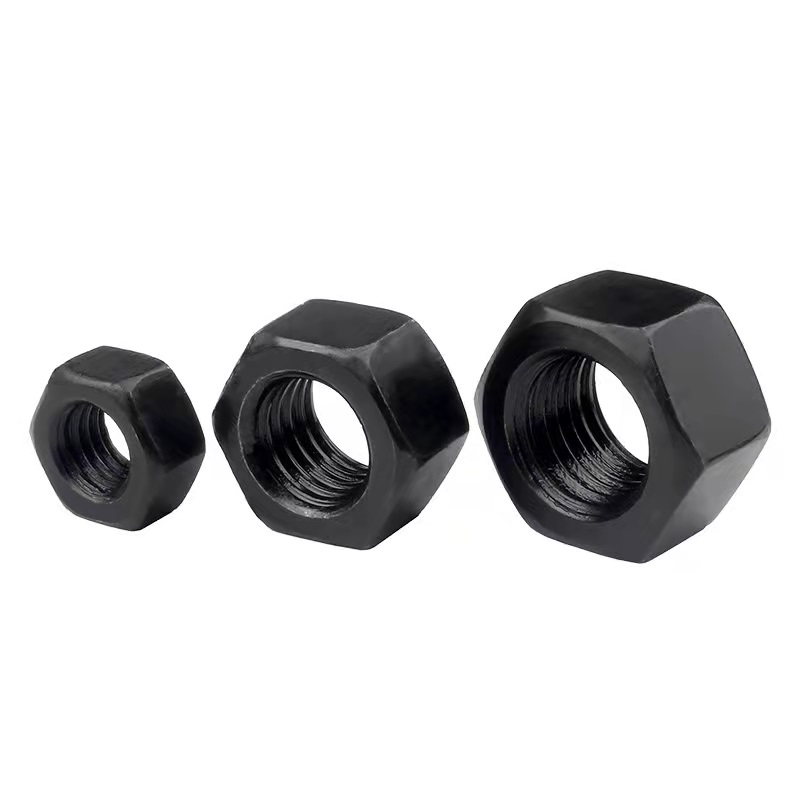
The performance of a 1/4-inch bolt is heavily reliant on its ability to withstand tensile, shear, and combined loading conditions. Tensile strength represents the maximum stress the bolt can endure before fracturing when subjected to a pulling force. Shear strength defines the maximum stress the bolt can withstand when subjected to a force parallel to its cross-section. Proof load is the maximum tensile force that can be applied without causing permanent deformation. Yield strength represents the point at which the bolt begins to deform plastically.
Engineering calculations must account for factors such as the bolt's material grade, thread pitch, clamping force, and safety factor. Thread engagement length is a critical parameter; insufficient engagement reduces the effective load-bearing area and increases the risk of thread stripping. Environmental resistance is also vital. Exposure to corrosive environments can lead to pitting corrosion, reducing the effective cross-sectional area and diminishing the bolt’s strength. Galvanic corrosion can occur when dissimilar metals are in contact in the presence of an electrolyte. Compliance requirements, such as those dictated by RoHS (Restriction of Hazardous Substances) and REACH (Registration, Evaluation, Authorisation and Restriction of Chemicals) regulations, must be considered, particularly for applications in sensitive industries. Finite element analysis (FEA) is often employed to model stress distributions within the bolt and the connected components, optimizing joint design and ensuring structural integrity. Preload, the initial tension applied to the bolt during tightening, is crucial. Adequate preload ensures the joint remains tight under dynamic loading and prevents loosening. Incorrect preload – too low or too high – can lead to failure.
Technical Specifications
| Parameter | SAE Grade 5 | SAE Grade 8 | 304 Stainless Steel |
|---|---|---|---|
| Tensile Strength (psi) | 85,000 | 150,000 | 70,000 |
| Yield Strength (psi) | 70,000 | 130,000 | 30,000 |
| Shear Strength (psi) | 40,000 | 75,000 | 35,000 |
| Proof Load (lbs) | 5,950 | 10,500 | 4,900 |
| Hardness (Rockwell C) | 70-80 | 85-95 | 85-100 |
| Corrosion Resistance | Low (requires coating) | Low (requires coating) | High |
Failure Mode & Maintenance
Common failure modes for 1/4-inch bolts include tensile failure (fracture due to excessive tensile load), shear failure (fracture due to excessive shear load), thread stripping (damage to the threads, preventing proper engagement), fatigue failure (failure due to repeated loading), and corrosion-induced failure. Fatigue cracking initiates at stress concentrations, often at the thread root or under the bolt head. Hydrogen embrittlement, a phenomenon where hydrogen atoms diffuse into the metal lattice, can significantly reduce ductility and increase susceptibility to cracking, particularly in high-strength steels. Corrosion, as previously mentioned, weakens the material and promotes pitting. Delamination can occur in plated coatings, exposing the underlying metal to corrosion. Oxidation forms surface layers that degrade the material over time.
Preventative maintenance includes regular inspection for signs of corrosion, cracking, or loosening. Applying a torque wrench to ensure proper preload during installation is crucial. Periodic retightening may be necessary, especially in applications subject to vibration or thermal cycling. Lubrication with an appropriate anti-seize compound can reduce friction and prevent galling. For corroded bolts, replacement is generally recommended. Non-destructive testing (NDT) methods, such as visual inspection, dye penetrant testing, and ultrasonic testing, can detect subsurface cracks and defects. A failure analysis should be conducted when a bolt fails prematurely to identify the root cause and prevent recurrence. Proper storage of bolts in a dry environment prevents corrosion prior to installation.
Industry FAQ
Q: What is the difference between Grade 5 and Grade 8 bolts in terms of application?
A: Grade 8 bolts, possessing significantly higher tensile and shear strengths, are preferred for applications involving higher loads, dynamic stresses, and critical safety requirements, such as suspension components in automotive systems. Grade 5 bolts are suitable for less demanding applications where cost is a primary consideration, like general assembly or fastening non-structural components.
Q: How does thread engagement length affect the strength of a bolted joint?
A: Shorter thread engagement lengths reduce the effective load-bearing area, increasing stress concentration and the risk of thread stripping. A minimum of one to one-and-a-half times the bolt diameter thread engagement is generally recommended for optimal strength.
Q: What steps can be taken to prevent corrosion in outdoor applications?
A: Utilizing stainless steel bolts (304 or 316) offers superior corrosion resistance. Alternatively, applying a protective coating like hot-dip galvanization or zinc plating provides a barrier against corrosive elements. Regular inspection and maintenance, including the application of corrosion inhibitors, are also crucial.
Q: What is the significance of bolt preload, and how is it properly achieved?
A: Bolt preload creates clamping force, preventing joint separation and increasing fatigue resistance. Proper preload is achieved using a calibrated torque wrench, referencing torque specifications based on bolt size, material, and lubrication conditions. Incorrect preload—too loose or too tight—can lead to joint failure.
Q: How do I identify a fatigued bolt before it fails catastrophically?
A: Signs of fatigue include visible cracks (often starting at thread roots or under the bolt head), discoloration, and a change in the bolt’s sound when tapped. Regular visual inspections and non-destructive testing methods, such as dye penetrant inspection, can help detect fatigue cracks before they reach a critical size.
Conclusion
1/4-inch bolts, while seemingly simple components, demand meticulous attention to material selection, manufacturing processes, and installation procedures to ensure reliable performance and structural integrity. Understanding the interplay between tensile strength, shear strength, preload, and environmental factors is paramount for preventing premature failure. Proper specification, coupled with routine inspection and maintenance, extends service life and minimizes the risk of catastrophic joint failure.
The increasing demand for lightweighting in industries like automotive and aerospace drives continuous innovation in bolt materials and manufacturing techniques. Further research into high-strength alloy steels and advanced surface treatments will likely yield even more durable and corrosion-resistant 1/4-inch bolts, expanding their applicability in demanding environments. Embracing predictive maintenance strategies, leveraging sensor technology to monitor bolt preload and detect early signs of fatigue, will further enhance the safety and efficiency of bolted joints.