
Introduction
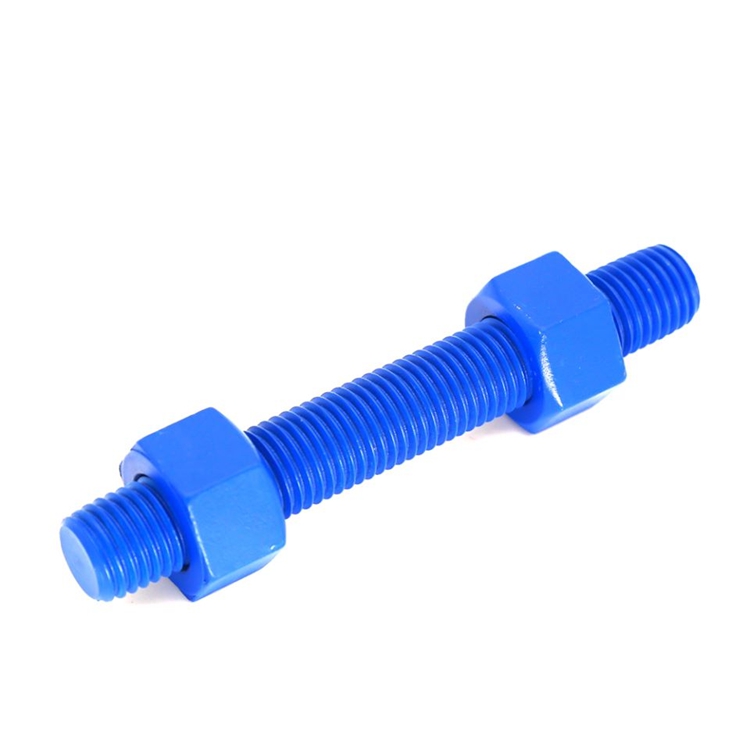
The 1/4-20 T-bolt, a standardized fastener, plays a critical role across numerous industrial applications, including automotive, machinery, and structural engineering. Its designation indicates a ¼ inch diameter bolt with 20 threads per inch. The ‘T’ head configuration offers an enhanced grip surface and facilitates torque application, distinguishing it from standard hex head bolts. This technical guide provides an in-depth examination of 1/4-20 T-bolts, encompassing material science, manufacturing processes, performance characteristics, potential failure modes, and relevant industry standards. A primary industry pain point addressed is ensuring consistent quality and performance, particularly regarding thread integrity, tensile strength, and corrosion resistance, to mitigate downtime and prevent catastrophic failures in critical assemblies. The increasing demand for lighter-weight materials in manufacturing also necessitates a thorough understanding of material compatibility when utilizing these bolts.
Material Science & Manufacturing
1/4-20 T-bolts are predominantly manufactured from medium carbon steel (typically AISI/SAE 1045) due to its balance of strength, ductility, and cost-effectiveness. The chemical composition of 1045 steel is approximately 0.45-0.50% carbon, 0.60-0.90% manganese, 0.015-0.040% phosphorus, 0.040-0.080% sulfur, and the balance iron. Higher grade bolts may utilize alloy steels (e.g., 4140, 8.8 grade) offering superior strength and toughness. Manufacturing commences with cold heading or hot forging to form the bolt’s shape. Cold heading offers tighter tolerances and improved surface finish, while hot forging is suitable for larger bolt sizes. Subsequent machining operations, including thread rolling and head forming, refine the bolt's dimensions. Critical parameter control during thread rolling is paramount; excessive feed rates can induce surface cracks and reduce fatigue life. Heat treatment, typically involving hardening and tempering, is applied to achieve the desired mechanical properties. The hardness, typically Rockwell C 30-40, is crucial for wear resistance and preventing thread stripping. Surface treatments such as zinc plating, black oxide coating, or phosphate coating are commonly applied to enhance corrosion resistance. Dimensional accuracy, thread pitch, and coating thickness are monitored using statistical process control (SPC) techniques to maintain consistent quality.

Performance & Engineering
The performance of a 1/4-20 T-bolt is fundamentally governed by its tensile strength, yield strength, shear strength, and fatigue resistance. Tensile strength, typically between 85,000 – 100,000 PSI for 1045 steel, dictates the bolt's ability to withstand pulling forces. Yield strength, around 60,000 – 75,000 PSI, defines the point at which permanent deformation occurs. Shear strength, approximately 40,000 – 50,000 PSI, is crucial for applications involving transverse loads. Fatigue resistance is a critical consideration in applications subjected to cyclical loading, as repeated stress can lead to crack initiation and propagation. Torque-tension relationships are carefully calibrated during assembly to ensure proper preload, which maximizes clamping force and minimizes the risk of joint separation. Environmental resistance is a key engineering parameter. Exposure to corrosive environments, such as salt spray or industrial chemicals, can significantly degrade bolt performance. Finite element analysis (FEA) is frequently employed to simulate stress distribution and optimize bolt geometry for specific applications. Compliance with relevant standards, such as ASTM A307 (carbon steel bolts) or ASTM A325 (high-strength bolts), is mandatory in many industries.
Technical Specifications
| Parameter | AISI/SAE 1045 Steel | Grade 8.8 Alloy Steel | Coating |
|---|---|---|---|
| Nominal Diameter | 0.25 in (6.35 mm) | 0.25 in (6.35 mm) | Zinc Plating |
| Thread Pitch | 20 TPI (5.08 mm) | 20 TPI (5.08 mm) | Black Oxide |
| Tensile Strength | 85,000 – 100,000 PSI | 120,000 – 150,000 PSI | Phosphate Coating |
| Yield Strength | 60,000 – 75,000 PSI | 90,000 – 110,000 PSI | None |
| Hardness (Rockwell C) | 30-40 | 35-45 | - |
| Minimum Preload (Typical) | 7,500 lbs | 12,000 lbs | - |
Failure Mode & Maintenance
Common failure modes for 1/4-20 T-bolts include thread stripping, tensile failure, shear failure, fatigue cracking, and corrosion-induced failure. Thread stripping occurs when the bolt is over-torqued or subjected to excessive shear loads. Tensile failure results from exceeding the bolt's tensile strength. Shear failure happens when the bolt is overloaded in shear. Fatigue cracking initiates from stress concentrations (e.g., thread roots, bolt head) and propagates under cyclical loading. Corrosion can weaken the bolt material and accelerate crack initiation. Preventative maintenance involves periodic inspections for signs of corrosion, damage, or loosening. Torque values should be verified using calibrated torque wrenches. Lubrication of threads with appropriate thread lubricants reduces friction and minimizes the risk of galling or seizing. In corrosive environments, periodic application of corrosion inhibitors is recommended. If a bolt shows signs of fatigue cracking or significant corrosion, it should be replaced immediately. Regular retorquing of bolts, particularly in dynamic applications, is crucial for maintaining joint integrity. Non-destructive testing methods, such as ultrasonic testing or magnetic particle inspection, can be used to detect internal cracks.
Industry FAQ
Q: What is the impact of thread form on the fatigue life of a 1/4-20 T-bolt?
A: The thread form significantly impacts fatigue life. Sharper thread roots create stress concentrations, accelerating crack initiation. Rolled threads generally exhibit higher fatigue strength than cut threads due to the compressive residual stresses induced during the rolling process. Optimized thread profiles, such as those with radiused root forms, further reduce stress concentrations and enhance fatigue resistance.
Q: How does the choice of coating affect the corrosion resistance of the bolt?
A: The coating material is critical for corrosion resistance. Zinc plating provides sacrificial protection, corroding preferentially to the bolt material. Black oxide coatings offer limited corrosion protection but improve aesthetics. Phosphate coatings enhance paint adhesion and provide moderate corrosion resistance. Hot-dip galvanizing offers superior corrosion protection but can alter bolt dimensions. The selection of coating depends on the severity of the corrosive environment.
Q: What are the implications of using a bolt with an incorrect hardness value?
A: An incorrect hardness value can lead to premature failure. Too soft a bolt will exhibit reduced wear resistance and is prone to thread stripping. Too hard a bolt can become brittle and susceptible to cracking under impact loads. Consistent hardness control during heat treatment is essential for ensuring reliable performance.
Q: What preload torque should be applied to a 1/4-20 T-bolt for a steel-to-steel joint?
A: The recommended preload torque depends on the bolt grade, thread lubrication, and joint material. A general guideline for a 1045 steel 1/4-20 T-bolt with dry threads in a steel-to-steel joint is approximately 7-10 ft-lbs. However, it is crucial to consult torque specifications provided by the joint designer or manufacturer.
Q: What is the difference between proof load and tensile strength in the context of 1/4-20 T-bolts?
A: Proof load represents the maximum tensile stress a bolt can withstand without permanent deformation. Tensile strength represents the maximum tensile stress the bolt can withstand before fracture. The proof load is always lower than the tensile strength. Bolts are typically designed to operate below the proof load to ensure reliable performance and prevent loosening.
Conclusion
The 1/4-20 T-bolt, despite its seemingly simple design, requires a comprehensive understanding of material science, manufacturing processes, and engineering principles to ensure optimal performance and reliability. The selection of appropriate materials, precise control of manufacturing parameters, and adherence to relevant industry standards are crucial for mitigating potential failure modes. Careful consideration of environmental factors and the implementation of preventative maintenance practices further enhance the longevity and integrity of bolted joints.
Future advancements in bolt technology will likely focus on the development of lighter-weight, higher-strength materials, improved corrosion-resistant coatings, and advanced monitoring systems for detecting bolt preload and fatigue damage. Integrating digital twins and predictive maintenance algorithms will enable proactive identification of potential failures, minimizing downtime and maximizing operational efficiency. Continued research and development in these areas are essential for meeting the evolving demands of modern industrial applications.